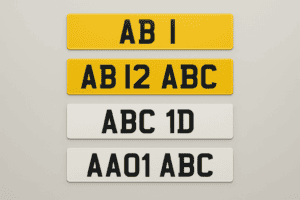
Custom number plates can help a business present a clear, professional image on the road. A well-chosen plate can support brand recognition, make fleet vehicles easier to identify, and add a consistent look across company cars and vans. Many organisations also use personalised registrations to reinforce credibility when visiting clients or attending events. This guide explains the practical benefits, key considerations, and common use cases for businesses.
Key takeaways
Custom number plates, also called personalised registrations, replace a standard vehicle registration mark with one that follows a chosen pattern. In the UK, the GOV.UK service manages the sale and transfer of registrations, while the DVLA administers records and eligibility. A business can use a plate to reflect a brand name, service, location, or memorable phrase, provided the format stays within legal rules.
The process usually involves selecting an available registration, assigning it to a vehicle, and fitting compliant plates. Sellers often support the purchase and transfer steps; for example, Buy Private Plate offers access to registrations and guidance on assignment. Once assigned, the registration becomes the vehicle identifier on the V5C logbook, and the business must display plates that meet UK requirements for font, spacing, and reflectivity. The plate must not make a vehicle appear newer than it is, and any misrepresentation can lead to enforcement action. When handled correctly, a custom plate functions like any other registration, while giving a company a clear, recognisable identity on the road.

Private number plates can strengthen brand recognition each time a company vehicle appears on the road, at a client site, or in a car park. A well-chosen registration can echo a trading name, service line, or local area, which helps people connect the vehicle with the business without needing to read smaller text on signage. Since vehicles often travel through multiple neighbourhoods each day, a distinctive plate can support consistent exposure across a wider area than static advertising.
Memorability also improves when a plate uses a clear, readable pattern. People tend to recall short, meaningful strings more easily than random characters, which can increase direct enquiries. For example, a plate that hints at a service can prompt a search later, while a plate that matches a brand name can reinforce recall when paired with van livery, uniforms, and printed materials. Consistency matters here: the strongest results come when the plate aligns with the same wording used on the website, invoices, and social profiles.
Private plates can also support fleet management from a branding perspective. When a business assigns related plates across multiple vehicles, the fleet can look more uniform and intentional. Before selecting a registration, confirm availability and compliance through the official GOV.UK personalised registration service, which helps ensure the plate can be used as intended.
A personalised registration can support a professional image when it aligns with the business name and reads clearly at a glance. Consistency matters: a plate that matches vehicle livery and contact details can signal organisation and reliability, which helps build customer trust before a meeting even begins. Compliance also plays a role in credibility. Plates must follow UK display rules on font, spacing, and materials, as set out by the GOV.UK guidance on displaying number plates. When a plate looks non-compliant, customers may question standards in other areas of the business.
Plates can harm perception when they appear gimmicky, ambiguous, or forced. A registration that relies on unusual spacing to “spell” a word can look unprofessional and may attract unwanted attention from enforcement. Similarly, a plate that suggests status rather than service can create distance in customer-facing sectors, where clients value approachability and transparency. If a plate hints at speed, aggression, or risky driving, it can undermine trust, especially when the vehicle represents a trade that enters homes or handles sensitive work.
Context should guide the choice. A premium consultancy may benefit from a restrained, name-led plate, while a local service business may gain more from clarity than cleverness. When in doubt, prioritise legibility, brand fit, and lawful presentation, then check that the registration supports the message the business wants each vehicle to convey.
Company vehicles already travel through high-footfall areas, so a memorable registration can extend brand exposure without buying extra media space. Each stop at a client site, trade counter, or supermarket car park creates a brief impression. When the plate reads clearly and relates to the business, people can remember the name long after the vehicle has left.
Recall improves when a message stays short and consistent. A plate that echoes a trading name, service keyword, or local cue can act as a prompt, especially when people see the vehicle repeatedly on the same routes. That repetition supports “mental availability”, which means a customer can bring a brand to mind quickly when a need arises.
Marketing reach also depends on legality and legibility. UK rules require standard character shapes, spacing, and approved materials, so a plate must not rely on stylised tricks to stand out. A compliant design protects brand credibility and reduces the risk of enforcement action. For the official requirements, use the guidance on GOV.UK.
To maximise recall, align the plate with other touchpoints. Match the wording to the company name on invoices, vans, and online listings, and avoid ambiguous letter-number swaps that slow reading. When a plate supports the same message as the livery and contact details, each journey becomes a small, repeatable brand cue that can influence future enquiries.
UK law sets clear rules for number plates, and business-owned vehicles must meet the same standards as private cars. The GOV.UK guidance on displaying number plates explains the required font, character size, spacing, and reflective background. Plates must show the British Standard mark (BS AU 145e) and the supplier name and postcode, which helps enforcement and reduces fraud. Drivers should also keep plates clean and legible, since damage or obscured characters can still result in enforcement action.
A business must also use a registration correctly. The GOV.UK service for personalised registrations sets the rules on buying, assigning, and retaining a mark. Misrepresenting a vehicle’s age by using a newer-style format on an older vehicle remains prohibited, even when the combination appears brand-friendly. Any attempt to alter spacing or use non-compliant fonts can trigger fines and may lead to withdrawal of the registration.
Operational controls matter as well. Fleet managers should keep assignment records up to date with the DVLA, especially after vehicle sales, lease changes, or rebranding. Clear internal checks reduce the risk of penalties, downtime, and reputational harm.

Costs vary widely because price depends on scarcity, character length, and demand. A business should treat the purchase as a marketing asset rather than a routine vehicle expense, since the registration can move between vehicles and remain in use for years. Transfer and retention fees also apply, so budgeting should cover the full lifecycle, not only the initial purchase.
Value can hold steady for sought-after combinations, yet resale remains uncertain. If a company expects to change fleet vehicles or branding, flexibility matters. Some registrations suit a single model or service line, while others support a broader brand message. When priorities change, a business may choose to Sell Owned Custom Plates to release capital or reduce non-essential assets.
Tax treatment depends on ownership, use, and accounting policy. A company should record the registration in a way that reflects how the business uses it, then keep clear evidence of purchase, transfer, and any sale proceeds. Since tax rules can differ by circumstance, guidance from a qualified accountant remains the safest route, especially where employee use of a company vehicle could create a benefit-in-kind charge.
Fleet consistency starts with a clear plate format policy. Many businesses choose registrations that share a recognisable structure, such as a common prefix, a repeated letter pair, or a short word that relates to the trading name. A consistent pattern helps drivers, customers, and site teams identify vehicles quickly, while also reducing the risk of mismatched branding across depots.
Format choices must stay within UK display rules. A registration must not misrepresent a vehicle’s age identifier, and spacing must remain standard. For current requirements, use the official guidance on displaying number plates (GOV.UK). When a business plans a multi-vehicle rollout, checking availability early can prevent a mix of unrelated plates caused by limited supply.
Material selection affects durability and appearance. Standard acrylic plates suit most fleets, while premium acrylic can improve clarity and resist yellowing. Some suppliers offer enhanced finishes, such as gel characters, which can look sharper under headlights. Any option must still meet the British Standard (BS AU 145e) and include the supplier identifier, so a “show plate” style finish does not suit road use.
Supplier choice matters as much as the plate itself. A single approved supplier can keep colour tone, character weight, and margins consistent across the fleet, even when vehicles sit in different regions. Procurement teams should verify that a supplier operates as a registered number plate supplier and can support repeat orders with the same specification.
For registrations, use the official personalised registrations service (GOV.UK) to buy, assign, or retain plates in a way that supports long-term fleet consistency.
Trades and home services often benefit from short, readable plates that echo the trading name, such as a plumber using a clear “PLMBR” style cue. That approach supports quick recognition when vans park on residential streets. A taxi firm or private hire operator can use a consistent fleet pattern, for example a shared prefix across vehicles, which helps dispatch teams and customers identify the correct car at busy pick-up points.
Professional services, such as accountancy or surveying, usually gain more from restraint than wordplay. A neat, conventional format can reinforce credibility when clients see a vehicle outside an office or site. Retailers and hospitality businesses can align plates with a location or brand shorthand to aid recall, particularly when vehicles make frequent local deliveries.
For logistics and multi-site operations, clarity and uniformity matter most. A structured sequence across the fleet supports yard checks and reduces confusion during handovers. When selecting any strategy, businesses should keep to the UK display rules set out by GOV.UK, since non-compliant spacing or stylised characters can undermine trust and invite enforcement action.
Custom number plates can reinforce brand visibility by displaying a memorable name, slogan, or abbreviation that people notice in traffic and at stops. A consistent plate format across a fleet strengthens recognition and supports recall. When paired with vehicle livery, the plate helps create a clear, professional identity on the road.
Business custom number plates must follow DVLA rules: use the correct font, size, spacing and colours (black on white front, black on yellow rear). Plates must show the supplier name and British Standard mark. You must not alter spacing to form words, use non-standard fonts, or display offensive combinations.
Company vehicles must use UK standard plates: white front and yellow rear, reflective, with black characters in the prescribed font and spacing. Permitted formats include current style (two letters, two numbers, three letters) and prefix or suffix styles where issued. Plates must show the supplier name and British Standard mark.
Custom number plates offer constant, low-maintenance brand visibility whenever a vehicle is on the road or parked. Vehicle wraps deliver higher impact and more space for messages, but cost more and need periodic replacement. Signage reaches fixed locations well, yet lacks mobility. Many businesses combine plates with wraps or signage for wider reach.
A business should budget for the plate price, DVLA transfer or retention fees, and supplier charges. Ongoing responsibilities include keeping the registration correctly assigned, updating V5C records after changes, fitting plates that meet legal standards, and renewing retention if the mark stays off a vehicle. Insurance and branding updates may also apply.