
Suffix Private Number Plates for Sale
The original year-coded format, issued 1963 to 1982. A distinctive piece of motoring history that fits beautifully on classics, modern restorations, and any car whose owner appreciates character.
Try Your Letters in Live Stock
Two or three letters or numbers. We show registrations carrying them as one unbroken block.
Classic Cherished Plates UK
Suffix number plates were the first UK registrations to encode a year of issue into the plate itself. Introduced in 1963 with the letter A, the system ran sequentially through to Y in 1982 before the prefix format took over.
The structure is instantly recognisable: three letters, up to three numbers, and a single year-letter at the end, giving combinations like ABC 123A or XYZ 1H. That single final letter is the part that gives every suffix plate its personality. Owners often choose a year-letter that matches the year of the car, the year they were born, or simply the look they want.
At BuyPrivatePlates.uk we list thousands of suffix registrations from across the full DVLA database, alongside vetted pre-owned listings. Every plate is sold with full transfer service, official paperwork, and no surprise fees at checkout.
Suffix plates remain a sweet spot in the market: more affordable than dateless, more characterful than current-style, and old enough to feel meaningful without being inaccessible. Whether you are wearing one on a restored classic or adding nostalgia to a modern daily driver, a suffix plate brings something newer formats cannot.
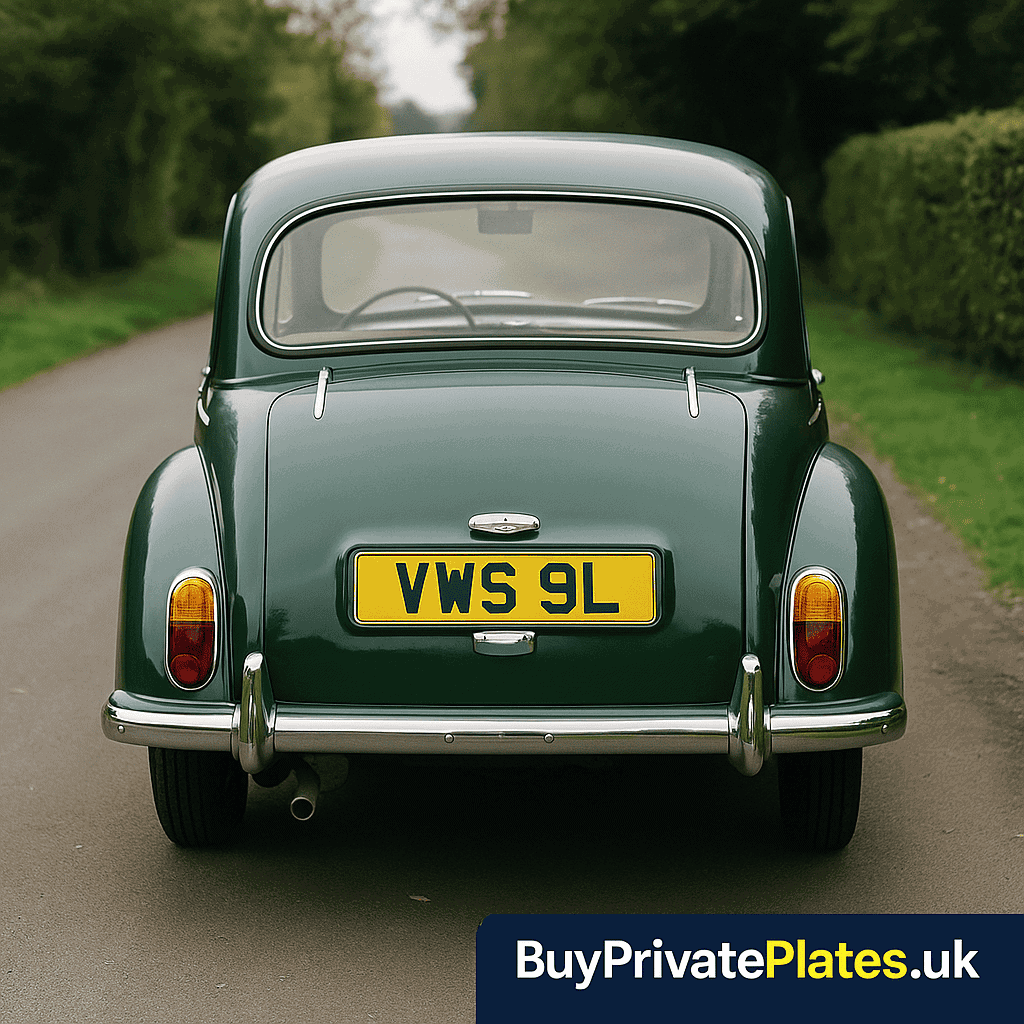
A 19-year window of British motoring history
The suffix system ran for nineteen years before the prefix format replaced it. Every plate you buy from this era is a piece of that history.
Matching Your Suffix Plate to a Car
Three common approaches to picking a year-letter, depending on what the plate is for.
Match the car year exactly
Pick a birth-year letter
Choose by aesthetic
Popular Names and Themes on Suffix Plates
Three-letter names sit naturally in the suffix format. Each link shows live suffix availability alongside other formats.
Suffix Number Plates: Frequently Asked Questions
Can I put a suffix plate on a modern car?
Why are some year-letters more expensive than others?
What do the three letters at the start of a suffix plate mean?
Can I display a suffix plate in a vintage font?
Are black-and-silver suffix plates still legal?
How quickly can a suffix plate be transferred?
Is a suffix plate a good investment?
Can I buy a suffix plate now and use it on a future car?
What happens to the plate when I sell the car?
What spacing rules apply to suffix plates?
Suffix-Friendly Guides From Our Blog
Pairs well with reading on plate rules, classic car authenticity, and what to do when changing cars.
Private Number Plate Formats and Rules: Age Identifiers, Spacing, and Display Standards
The official rules covering every format, including the BS AU 145e plate-display standard and the age-identifier system.
Read guide → AuthenticityWhat Are Show Plates and When Are They Legal to Use?
The difference between a legal road plate and a show plate, with detail on font, colour, and what the DVLA accepts at MOT.
Read guide → Selling onWhat Happens to Your Private Plate When You Sell the Car
Retention, transfer, and timing tips for keeping your suffix plate when moving on from your current vehicle.
Read guide →What Suffix Plate Buyers Say
Got an L-suffix to match my 1972 Triumph Stag. The team checked the V5C date for me before processing the order and the plate arrived inside a week. Looks original from ten feet away.
Bought an N-suffix with my birth year for my wife. She loved the meaning behind it more than the plate itself. Service was friendly and the retention certificate arrived without any chasing.
I am a regular buyer of suffix plates for restoration projects. This is the third I have bought from BuyPrivatePlates and the experience has been the same every time: live stock, honest pricing, clean handover.
Find a Suffix Plate With Real Character
Browse live DVLA suffix stock spanning 1963 to 1982, with full transfer service included and no hidden fees. Match your car, your birth year, or just pick the look you like.