Key takeaways
Show plates are decorative vehicle registration plates used for display rather than road use. Owners often fit them at car shows, photo shoots, or on private land to highlight styling, branding, or a personalised design. Standard number plates, by contrast, must meet strict legal rules on size, font, spacing, reflectivity, and supplier markings. In Great Britain, drivers must follow the requirements set out by the DVLA when using plates on public roads. Show plates may include non-compliant fonts or layouts, which makes them unsuitable for legal road driving.
Show plates suit situations where presentation matters more than legal compliance. Owners tend to use them when a vehicle stays off the public road and the plate acts as a styling detail, a prop, or a branding element.
These uses remain distinct from road use. In Great Britain, number plates used on public roads must meet legal standards and display the correct registration. Guidance from the UK Government (GOV.UK) explains the requirements for displaying number plates, including rules on characters, layout, and markings. A show plate can support presentation, yet a compliant road plate must return to the vehicle before it enters public traffic.
Show plates are not road legal when a vehicle uses them on public roads in Great Britain. The law requires number plates to meet strict rules on font, character size, spacing, reflectivity, and mandatory markings. Drivers must also display the correct registration number for the vehicle. When a plate fails any of these requirements, the vehicle does not comply with road traffic rules. Key reasons a show plate becomes unlawful on the road include:
Enforcement can involve a fixed penalty, a requirement to replace the plates, or closer scrutiny at an MOT test. Police and camera systems rely on clear plates, so non-compliant designs can trigger stops and penalties. For the definitive rules, consult the GOV.UK guidance on displaying number plates and the Driver and Vehicle Standards Agency (DVSA).
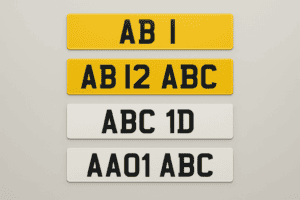
DVLA rules set clear standards for plates used on public roads, and those standards often explain why show plates fail compliance. A road-legal plate must display the vehicle registration exactly as issued, with no styling changes that alter readability. Drivers must also use the prescribed typeface (the Charles Wright font) and keep legal character height, stroke width, and spacing. Material and finish also matter. Standard plates need the correct reflective background (white at the front, yellow at the rear) and black characters. Tinted, coloured, carbon-look, or patterned backgrounds usually breach the rules, even when the registration remains correct. Fixings can create problems as well; bolts or screws must not change the appearance of any character. Mandatory markings apply to compliant plates. A legal plate normally includes the supplier name and postcode, plus the British Standard reference, which helps confirm that the plate meets required performance and durability. Optional identifiers, such as a UK identifier with the Union Flag, must follow the permitted format. When a plate departs from any of these requirements, enforcement action can follow, including fines and a failed MOT where the plate does not meet the testable criteria.
Show plates tend to follow a few popular styling choices, even when the design does not meet road rules. Fonts often mimic motorsport graphics, retro scripts, or “3D” effects that use shading to create depth. Some owners choose condensed characters to reduce the visual width of the registration, while others pick wide lettering to suit a square plate on imports. Spacing changes also feature heavily. A common approach tightens gaps between characters to create a cleaner block of text, while another style shifts spacing to emphasise a name-like reading. Colour choices vary by theme. Matte black plates with grey or silver characters suit modern builds, whereas pressed metal plates with raised characters suit classic cars. Tinted backgrounds and coloured characters appear on show cars, although these finishes can reduce contrast under certain lighting. Borders and layouts add another layer of customisation. Thin keylines, thick frames, and “Euro” band designs help match paintwork or decals. Some plates include small logos, slogans, or location text as part of a club identity. For the legal baseline that these styles often depart from, refer to the official guidance from the DVLA.
Manufacturers produce show plates in several materials, each with a distinct look and finish. Acrylic remains the most common option because it is light, durable, and easy to cut to custom shapes. Many suppliers bond a printed backing to clear acrylic, then apply a glossy face to create a deep, “glass” effect under show lighting. Metal plates, often aluminium, suit builds that aim for a classic or motorsport style. Fabricators typically print, press, or emboss the characters, which can add crisp edges and a more rigid feel than plastic. Some owners also choose brushed finishes to reduce glare in photography. 3D gel and raised-letter designs use polyurethane resin or moulded characters to create height. Installers apply the gel or letters on top of the face layer, which produces shadows and depth that stand out at close range. For UK road use, check the latest number plate standards on the GOV.UK number plate guidance.
When ordering show plates, suppliers still need enough information to produce a plate that matches the registration you request. Provide the exact vehicle registration number, choose the plate size and shape, and confirm the preferred style options such as border, badge, and finish. Clear instructions reduce errors, especially where a vehicle uses a non-standard mounting area. If you have specific spacing or character layout requirements, state them clearly at checkout to avoid delays. Many reputable suppliers also ask for proof of entitlement before making plates, even when the product is for display use. Proof of entitlement means evidence that you have the right to use the registration mark. Common examples include a V5C log book, a V750 certificate of entitlement, or a V778 retention document. You may also need to show identification, such as a driving licence or passport, to confirm the purchaser’s name. These checks help prevent misuse of registration marks and support responsible supply. Some suppliers may request clear scans or photos to speed up verification. For a straightforward ordering route, use Order Showplates at Number plates 4 You and follow the prompts for sizing, design choices, and any requested documents. Review the preview carefully before payment to confirm the registration reads exactly as intended.
Using show plates on public roads can trigger immediate enforcement because the plate may fail legal standards for readability and identification. Police officers can stop a vehicle if a plate uses non-standard fonts, altered spacing, tinted backgrounds, missing supplier marks, or any design that makes the registration harder to read. In many cases, officers treat the issue as an offence linked to vehicle identification rather than a minor styling choice. Financial penalties can follow, and repeated non-compliance may lead to stronger action. Police may issue a Vehicle Defect Rectification Notice, which requires the driver to fit compliant plates and provide proof within a set time. If a driver ignores the notice, enforcement can escalate. In serious cases, officers can seize a vehicle when other offences apply, or when a driver continues to use illegal plates after warnings. MOT outcomes can also suffer. A tester will fail a vehicle if the registration plate does not meet legal requirements, or if the plate condition prevents clear reading. Drivers should check current guidance from the UK Government and the DVLA before any road use, since a compliant plate often costs far less than the disruption caused by enforcement.
Select a supplier that treats show plates as a manufactured product, not a novelty item. Even when a plate is for display use, clear provenance helps if you later order a compliant road plate. Check for a physical address, clear contact details, and transparent pricing, since reputable firms make accountability easy. Ask what quality checks the supplier uses, such as colour consistency, clean character edges, and durable bonding between the face and backing. Poor adhesion can cause lifting at the corners, while low-grade acrylic can haze under sunlight. Request confirmation of the material thickness and whether the print resists fading. If you also plan to buy road-legal plates, confirm that the supplier can provide the required markings and meet the British Standard referenced by the UK Government guidance on number plates. A supplier that understands those rules usually produces better show plates as well, since the same attention to legibility and finish applies.
Show plates are decorative vehicle plates used for display at events, photos, or off-road use. Standard number plates are legal identifiers for road use and must meet UK rules on size, font, spacing, reflectivity, and supplier markings. Show plates may ignore these rules, so drivers must not use them on public roads.
On public roads, show plates must meet UK number plate rules: correct font, size, spacing, colours, reflective material, and the supplier and British Standard markings. Plates must display the registered number exactly, without stylised characters or altered spacing. Using non-compliant plates can lead to fines, an MOT failure, or police action.
Show plates often use acrylic, aluminium, or rigid plastic for a clean, durable look. Common finishes include gloss or matte faces, reflective backgrounds, and metallic effects such as brushed silver or gold. Many also use raised 3D gel or 4D laser-cut characters, with UV-stable printing to help resist fading.
A show plate can display non-road-legal details such as a name, nickname, club title, event branding, a slogan, or decorative graphics. It can also show a registration-style message, provided it is not used on public roads. Avoid layouts that mimic legal plates, including the GB identifier, standard font, spacing, and the supplier and British Standard markings.
Check that the supplier states compliance with BS AU 145e and can provide written evidence, such as a declaration of conformity or test results. Confirm that plates show the required supplier name and postcode, plus the British Standard mark. Ask whether the supplier verifies identity and entitlement before supplying registration plates.
Vehicles use show plates to present a clean, consistent look for display and photography. Owners often match the plate style to a theme, hide damage, or avoid showing personal details. Event organisers may also require non-road plates for branding or to prevent confusion with registered vehicles.
Fitting show plates to a road-going vehicle can breach UK number plate rules. Police may issue a fine, a vehicle defect rectification notice, or report the driver for prosecution. The Driver and Vehicle Licensing Agency (DVLA) can withdraw the registration number. Insurers may also treat the change as a modification and refuse cover.